

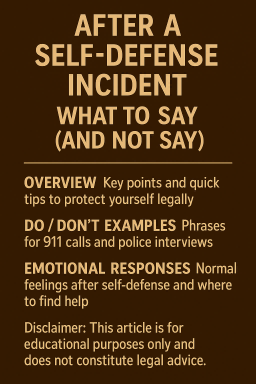
After a Self-Defense Incident: What to Say (and Not Say)
Published on SelfDefense.fun · Legal & Practical Self-Defense Advice

Overview
Surviving a self-defense incident is only the beginning. What you say immediately afterward—to the attacker, to bystanders, or to police—can greatly influence how the law views your actions. Understanding what’s appropriate to say (and what isn’t) protects you not just physically, but legally.
1️⃣ Stay Calm and Safe First
- Check surroundings — make sure the threat is gone.
- Move to safety — keep distance from the scene.
- Call 911 immediately — request police and medical aid.
“There’s been an assault. I acted in self-defense. Please send help.”
Keep details brief until officers arrive.
2️⃣ What to Say to 911
Provide only the essentials: who you are, what happened, and where you are.
- ✅ “My name is [Your Name]. I was attacked and used pepper spray in self-defense.”
- ❌ “I taught him a lesson he won’t forget!”
3️⃣ What to Say to Police
- Keep hands visible and remain calm.
- Say: “I was attacked. I feared for my safety and used my self-defense tool to stop the attack.”
- Then add: “I would like to speak with my attorney before providing a full statement.”
4️⃣ What NOT to Say
- ❌ Don’t argue with officers or witnesses.
- ❌ Don’t apologize (“I’m sorry I hurt him”).
- ❌ Don’t say “I didn’t mean to” or “I lost control.”
- ❌ Don’t post or message anyone about the event.
5️⃣ What to Do Instead
- ✅ Call a trusted friend or lawyer.
- ✅ Preserve video and product evidence.
- ✅ Keep your pepper spray or stun gun as-is; do not tamper with it.
- ✅ Write down what happened as soon as you can.
6️⃣ Emotional Aftermath
Even a lawful act of self-defense can cause stress or guilt. It’s normal—consider counseling or community training programs to restore confidence and emotional balance.
Key Takeaways
| ✅ Do | ❌ Don’t |
|---|---|
| Call 911 immediately | Post on social media |
| Say “I feared for my safety” | Say “I punished him” |
| Ask for an attorney | Volunteer unnecessary details |
| Preserve evidence | Throw away or clean items |
Related Guides
- Reasonable Force Explained: Proportion, Necessity, and Retreat
- Carrying Pepper Spray: Legal Responsibilities and Limits
- Top 10 Self-Defense Tips for Women Walking Alone at Night
Disclaimer: This article is for educational purposes only and does not constitute legal advice. Always consult a qualified attorney after any self-defense incident.